
Cannabis has had quite the reputation over the years. For some, the word still brings up images of tie-dye, lava lamps, and one friend who “found himself” in 1973. Today, cannabis science has matured. Researchers are no longer just fascinated with THC, the intoxicating molecule that creates the “high.” They are now studying a family of non-intoxicating or minimally intoxicating plant compounds that may support comfort, calm, sleep, inflammation balance, and overall quality of life.
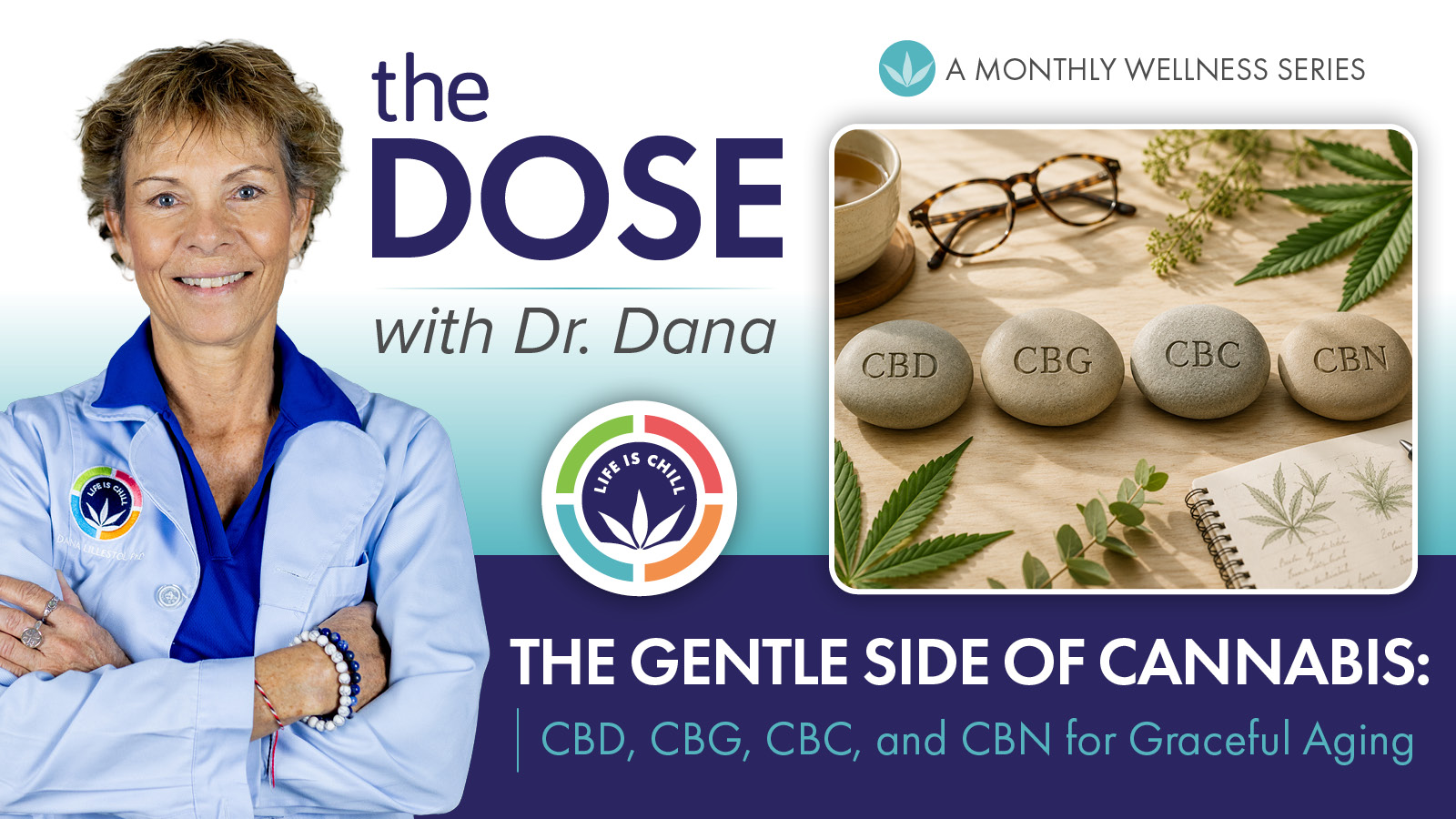
For seniors and veterans, this matters. Aging often brings a new relationship with the body: joints talk louder, sleep can become lighter, stress may linger longer, and the medicine cabinet starts looking like a tiny pharmacy. Veterans may also carry unique burdens, including chronic pain, sleep disruption, traumatic stress, anxiety, and the long-term effects of service. This is where the gentler molecules of the cannabis plant–CBD, CBG, CBC, and CBN—have entered the wellness dialogue.
The molecules of cannabis, also called cannabinoids, are not magic beans. They are not a cure-all. They will not replace your medical doctor or care therapist, physical movement, nutrition, sleep hygiene, or a trusted healthcare team. But they may be a useful botanical tool when chosen carefully, used thoughtfully, and discussed openly with a clinician.
Scientists have identified over 144 cannabinoids within the cannabis plant, along with hundreds of aromatic compounds called terpenes or essential oils. Think of cannabinoids as separate members of a family with different roles and talents.
First Meet the Body’s Built-In Cannabis—Like System
Surprise: your body already has a cannabinoid system. It is called the endocannabinoid system or ECS, and it helps regulate many “balance points” in the body, including pain signaling, inflammation, mood, appetite, sleep, immune function, and stress response. Think of it as the body’s internal dimmer switch. When life turns the volume too high—pain, tension, poor sleep, inflammation— the ECS helps nudge things back toward balance.
Cannabinoids from the cannabis plant interact with the ECS system in different ways. THC binds strongly to Cannabinoid 1 (CB1) receptors in the brain, which is why it can be intoxicating. CBD, CBG, CBC, and CBN are different. They tend to work more indirectly or more subtly, which is why they are often described as non-intoxicating or much less intoxicating than THC.
CBD: The Calm, Cool, Collected One
CBD, short for Cannabidiol, is the best-known non-intoxicating cannabinoid. It does not create the classic cannabis high. It has become the superstar of wellness products. CBD has been studied for seizures, anxiety, inflammation, pain, sleep, and neuroprotection, although the strength of evidence varies widely by condition.
The strongest medical evidence for CBD is in certain rare seizure disorders: one prescription CBD medication has FDA approval for specific forms of epilepsy. Outside of that, CBD is widely used by consumers for sleep, pain, stress, and general wellness, but research in older adults is still developing. Reviews of medical cannabis use among older adults suggests potential symptom benefits for pain, insomnia, anxiety, nausea, and other concerns, but the evidence is often inconsistent and limited by small studies or self-report data.
For graceful aging, CBD may be most interesting as a “steady support” molecule. Many people use it to take the edge off discomfort, calm the nervous system, or support sleep routines. However, CBD is not risk-free. It can interact with medications, especially drugs metabolized through liver enzyme pathways.
For seniors and veterans, that matters because many people take blood thinners, heart medications, mood medications, seizure medications, pain medications, or sleep aids. The golden rule is simple: CBD may be gentle, but it still deserves respect.
CBG: “The Mother Cannabinoid” With a Spark of Curiosity
CBG, or Cannabigerol, is often called the “mother cannabinoid” because its acidic precursor, CBGA, helps give rise to several other cannabinoids as the cannabis plant matures. CBG is usually present in smaller amounts than CBD or THC, though plant breeders are now cultivating higher-CBG varieties.
CBG has attracted interest in possible effects on mood, stress, inflammation, gut function, and neuroprotection. Human research is still early, but one 2024 human trial found that a 20 mg dose of hemp-derived CBG reduced self-reported anxiety and stress compared with placebo in healthy adults. The authors also noted that, before this study, no published human clinical trails of CBG had existed, which is a good reminder that the science is promising but young.
For graceful aging, CBG may eventually become a “get-up-and-go, but gently” cannabinoid. Some consumers describe it as more clarifying than sedating, though personal responses vary. For veterans who feel caught between tension and fatigue, CBG is worth watching—but not overselling. The current research is a budding sprout yet not a full-grown tree.
CBC: The Quiet Team Player
CBC: or Cannabichromene, is one of the lesser-known cannabinoids. It does not get nearly the same attention as CBD, but it may have its own unique properties. Early research suggests CBC may interact with non-CB1 receptor systems involved in pain and inflammation, including TRP channels. CBC is often discussed as a potential “supporting actor” in the entourage effect—the idea that cannabinoids, terpenes, and other plant compounds may work together in ways that differ from isolated compounds.
A 2024 review described CBC as a promising but under-researched cannabinoid, with far more preclinical than clinical evidence available. Human research in the pharmacokinetics of CBC has been examined in combination with CBD and THC, and daily CBC ingestion. Those studies revealed subjects tolerated these cannabinoids at certain doses, but robust clinical trials are still limited.
For seniors and veterans, CBC is best described as “interesting, but still under investigation.” It may eventually prove useful in formulations designed for discomfort, inflammation, balance, or mood support. But right now, we need more human studies before making bold claims.
CBN: The Sleepy Cannabinoid?
CBN or Cannabinol, is often labeled as the “sleep cannabinoid.” It forms as THC ages, oxidizes or degrades. This is why older cannabis flower may contain more CBN. CBN is not strongly intoxicating like THC, but it may be mildly psychoactive or sedating in some people, especially at higher doses or when combined with THC.
The sleep claims around CBN are popular, but the evidence is still catching up. A review titled Cannabinol and Sleep: Separating Fact from Friction noted that marketing claims have outpaced clinical evidence. Recent research on CBN for sleep has begun in controlled studies. A 2024 randomized, double-blind, placebo-controlled trial evaluated hemp-derived CBN sleep formulations, while other studies continue to explore safety, next-day effects, and whether CBN truly improves insomnia outcomes.
For graceful aging, sleep is no small thing. Poor sleep affects memory, balance, immune resilience, pain perception, mood, and metabolic health. If CBN helps some people unwind, that is worth studying. But seniors should be careful with anything sedating. Nighttime grogginess can become morning unsteadiness, and morning unsteadiness can become a fall. And falls are nobody’s idea of graceful aging.
How These Molecules May Support Graceful Aging
Graceful aging is not about pretending we are 25 forever. It is about preserving function, dignity, joy, mobility, sleep, connection, and curiosity. CBD, CBG, CBC, and CBN may support that goal in several practical ways.
Comfort and mobility: Cannabinoids may influence pain signaling and inflammation pathways. For older adults with stiff joints, old injuries, neuropathic discomfort, or service-related wear and tear, this is one of the most common reasons for interest in cannabis products. The National Academies’ major review found substantial evidence that cannabis or cannabinoids can help chronic pain in adults, though much of that evidence involved cannabis products containing THC rather than isolated non-intoxicating cannabinoids.
Sleep Support: CBD and CBN are commonly used for sleep, though evidence is mixed and product formulas vary. Sleep benefits may be indirect: If discomfort, stress, or racing thoughts quiet down, sleep may improve. But cannabis is not automatically a sleep cure, and high THC products can worsen sleep quality for next-day alertness in some people.
Inflammation Balance: Inflammation is part of healing, but chronic inflammatory signaling can contribute to pain, fatigue, and age-related decline. Cannabinoids are being studied for anti-inflammatory and immune-modulating effects, though translating lab findings into real-world clinical guidance takes time.
A Gentler Wellness Option for Some: Some seniors prefer non-intoxicating cannabinoids because they want symptom support without feeling impaired. That is reasonable. The goal is not to be “stoned.” The goal is to remain present, steady, and functional—able to garden, walk the dog, visit the grandkids, play cards, attend appointments, or enjoy a good cup of coffee without feeling foggy.
A Special Note for Veterans
Veterans deserve straight talk, not hype. Cannabis laws remain complicated, and federal rules differ from state programs. The Veterans Administration (VA) states that veterans will not be denied VA benefits because of cannabis use or participation in a state marijuana program. VA providers can discuss cannabis use as part of care planning, but VA clinicians are prohibited from recommending cannabis, completing forms, or helping veterans register for state marijuana programs.
That means veterans should still tell their VA healthcare team about CBD, CBG, CBC, CBN, or cannabis use. Not because anyone is in trouble—but because your clinician needs the full map. Cannabinoids may interact with medications, affect sleep, mood, balance, cognition, liver enzymes, and the risk of overuse of a substance-dependence. Good medicine works best when everyone is reading from the same chart.
Product Wisdom: Don’t Let the Label Wear a Costume
The cannabis marketplace can be confusing. A bottle may say “CBD” in big friendly letters but still contain THC, contaminants, inaccurate dosing, or ingredients that do not match the label. Older adults and veterans should look for:
- Third-party testing with a certificate of analysis.
- Clear cannabinoid content per serving, not just per bottle.
- Low or no THC, especially for those avoiding impairment, drug testing concerns, or psychiatric side effects.
- Non-smoked forms, such as tinctures, capsules, or topicals, when appropriate.
- Simple formulas, especially for beginners. The more ingredients, the more variables.
- A medication review with a clinician or pharmacist.
The FDA continues to highlight safety concerns with CBD products, including liver effects, drug interactions, and uncertainty around long-term use, especially in unregulated consumer products.
Start Low, Go Slow, Stay Curious
The senior-friendly cannabis motto is start low, go slow, and keep notes. A low dose gives the body a chance to introduce itself politely. Going slow helps avoid dizziness, grogginess, digestive upset, anxiety, or medication interactions. A simple notebook can track dose, timing, product, sleep, pain, mood, balance, and side effects.
For example: “CBD oil, 5 mg 7 p.m. Slept 6 hours. Woke once. No dizziness.”
That little note is more useful than guessing. It turns wellness into a conversation with your body instead of a game of botanical bingo.
The Bottom Line: A Plant with Promise, not a Panacea
CBD, CBG, CBC, and CBN represent the quieter side of cannabis—the molecules that whisper rather than shout. They may support comfort, calm, sleep, and resilience for some seniors and veterans. They may also help people explore plant-based wellness without intoxication. But they are not risk-free, not fully understood, and not a replacement for professional care.
Graceful aging is a team sport. It includes movement, nourishment, hydration, sleep, social connection, purpose, medical care, laughter, and may be—when appropriate—a carefully chosen botanical helper from the cannabis plant.
So perhaps the modern elder’s cannabis motto is this:
Stay curious. Stay steady. Ask good questions. Read the label. Tell your doctor. And never underestimate the healing power of a good night’s sleep, a good laugh, and a body treated with respect.
References
- Binkowska, A. A., Mateja, A., & Jakubowska, N. (2025, August). Cannabidiol and cognitive function in older adults. Frontiers in Psychiatry. Retrieved July 7, 2026, at https://pubmed.ncbi.nlm.nih.gov/40950765/
- Cuttler, C., Stueber, A., Cooper, Z.D., & Russo, E. (2024, July). Acute effects of cannabigerol on anxiety, stress, and mood. Scientific Reports, 14, Retrieved July1, 2026 at https://www.nature.com/articles/s41598-024-66879-0
- Ho, J. J. Y., Goh, C., Leong, C.S.A., Ng, J.Y., & Bakhtiar, A. (2024, May). Evaluation of potential drug–drug interactions with medical cannabis. Clinical Translational Science, Retrieved April 25, 2026, at https://pubmed.ncbi.nlm.nih.gov/38720531/.
- Nachnani, R., Knehans, A., Neighbors, J. et al. (2024, May). Systematic review of drug-drug interactions of delta-9-tetrahydrocannabinol and cannabidiol. Frontiers in Pharmacology, Retrieved June 5, 2026, at https://pmc.ncbi.nlm.nih.gov/articles/PMC11167383/.
- Sepulveda, D. E., Vrana, K.E., Kellogg, J.J., Bisanz, J.E, et al. (2024, November). The Potential of Cannabichromene as a Therapeutic Agent. The Journal of Pharmacology and Experimental Therapeutics, 391(2), 206-213. Retrieved July 3, 2026, at https://www.sciencedirect.com/science/article/pii/S0022356524178044.
- Peters, E. N., MacNair, L., Mosesova, I, Christians, U. et al. (2021). Pharmacokinetics of cannabichromene in a medical cannabis product. European Journal of Clinical Pharmacology, 78(2)m 259-265. Retrieved July 12, 2026, at https://pubmed.ncbi.nlm.nih.gov/34664109/.
- Corroon, J. (2021, October). Cannabinol and Sleep: Separating Fact from Fiction. Cannabis Cannabinoid Research, 6(5), 366-371. Retrieved July 20, 2026, at https://pubmed.ncbi.nlm.nih.gov/34468204/.
- Kolobaric, A., Saleska, J., Hewlings, S., J. et al. (2024, July). A Randomized, Double-Blind, Placebo-Controlled Trial to Assess the Effectiveness and Safety of Melatonin and Three formulations of Floraworks Proprietaryt TruCBN for Improving Sleep. Pharmaceuticals, 17(8), 977. Retrieved July 19, 2026, at https://pubmed.ncbi.nlm.nih.gov/39204082/.
- Wang, Y., Robinson, K.R., Fechtel, H., & Hartog, A. (2023, September). Medical Cannabis Use and Its Impact on Health Among Older Adults. Current Addiction Reports, 10(4), 837-843. Retrieved July 2, 2026, at https://pmc.ncbi.nlm.nih.gov/articles/PMC10997349/.
- U.S. Department of Veterans Affairs. (2023). Public Health: VA and Marijuana – What Veterans need to know. Retrieved July 21, 2026, at https://www.publichealth.va.gov/marijuana.asp
- U.S. Department of Veterans Affairs. Hill, M., Loflin, M., Hicks, T., Browne, K., & Norman, S.D. (2021). PTSD: Cannabis Use and PTSD Among Veterans. Retrieved July 21, 2026, at https://www.ptsd.va.gov/professional/treat/cooccurring/marijuana_ptsd_vets.asp.
- U.S. Food and Drug Administration. (2024). FDA Regulation of Cannabis and Cannabis-Derived Products, Including Cannabidiol. Retrieved July 21, 2026, at https://www.fda.gov/news-events/public-health-focus/fda-regulation-cannabis-and-cannabis-derived-products-including-cannabidiol-cbd.
Disclaimer: This article is written for educational purposes and should not be interpreted as medical advice. Decisions about cannabis use should always be made in partnership with a qualified healthcare professional who is familiar with your medical history and current medications.